
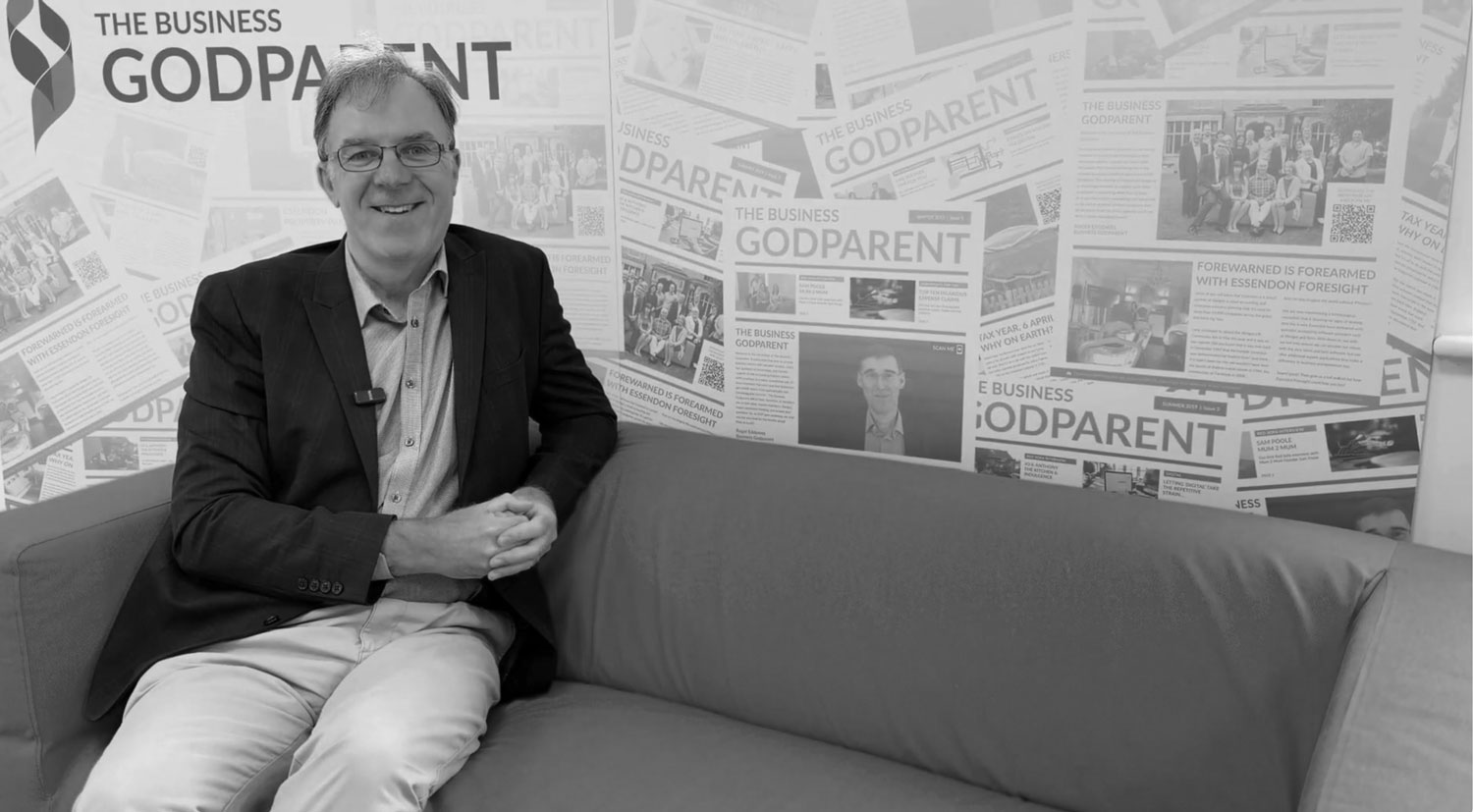
Simon Badman on The Red Sofa
Interviewer: Good morning, today we have the pleasure of welcoming Simon Badman from RAF 2 to the Red Sofa.
Simon: Hi Terry, good to be here.
Interviewer: Can you give insights into yourself and RAF 2 and how you enable businesses and organisations alike to become truly sustainable from a data approach that enables them to communicate this effectively in a sustainable way, a way that is not seen as greenwashing but they can be confident in not green hushing?
Simon: Yeah, well I think there’s an issue that businesses are facing, especially businesses where they’re founded on purpose and around sustainability purpose as well. So the way they communicate is really important.
Consumers, clients, supply chains are looking for what are your eco credentials? How sustainable are you?
But in the last sort of year or so, there’s been some legislation, some pitfalls which businesses need to be aware of. So things like the Competition Markets Authority can now charge 10% revenue if people start to greenwash and the failure to prevent fraud offence came in in September, which means that greenwashing is now a criminal offence.
What I mean by greenwashing, I should explain, is that businesses are using sustainability terms to describe their businesses or products which they can’t back up.
Interviewer: Got you.
Simon: So businesses might say eco-friendly or we do 100% recycled plastic. Yeah, but where’s your evidence? Where’s the data that shows that?
So people like the Competition Markets Authority, the Advertising Standards Authority and others as well are now asking for that.
So there’s another term, green hushing, to be really quiet about what you’re doing on the sustainability front. The danger is there. You’re losing your customers, you’re losing your market because they want to hear about it.
So we have to navigate between greenwashing and green hushing and work out your messaging that’s appropriate for your business around sustainability.
Interviewer: Sure, thank you. What are the biggest sustainability challenges businesses and organisations are facing today and why do you think many are struggling to know where to start?
Simon: I think it comes down to one thing and that’s the data.
So businesses have the data, they don’t know how to get to it though. They don’t know how to use it for their benefit.
One of the challenges that some of the bigger businesses have around sustainability data is they have sustainability teams, chief sustainability officers that are in a constant cycle of reporting.
We finish a 12-month reporting programme and then we’re on to the next one. And you think, hang on a minute, how can you actually change your business? How can you look at the risks you’re facing around sustainability? How can you mitigate some of the issues that you’re facing and benefit the business?
If you’re on this reporting cycle all the time, you haven’t got any time to do this. There’s no capacity to actually change what the business is doing.
So that would be probably the biggest one: the data and then the capacity around changing your business to make your business more sustainable.
Interviewer: Thank you. What are some of the most common misconceptions you encounter when organisations talk about sustainability?
Simon: That’s a really great question, actually. Sustainability is a loaded term.
So we’re using the term between us. Now your version of what sustainability is, it’s probably very different to mine.
Interviewer: Sure.
Simon: So if you look at, I think it was last year, Nokia put out one of their posts on LinkedIn: “Hey, we’ve just published our sustainability report for the year. Please have a look.”
What they then went on to talk about in the post is all around emissions and carbon reduction.
So that’s one part of sustainability. What you’re doing on the emissions front, it’s an important part of sustainability, but it’s not the only part.
What are you doing on the social aspects? What are you doing on governance aspects of sustainability as well?
And probably the best definition – this is my own version, but if you Google it, you can see it – the UN talks about working in a way today that preserves what we’re doing for the future, for future generations.
And if you look at something like the Sustainable Development Goals, it’s 17 across a whole range of subjects, including gender equality and partnerships to the goal and zero hunger.
They tend to encompass sustainability in a more embracing way and more inclusive way.
Interviewer: OK. In your experience, what does good sustainability practice actually look like and how can businesses ensure that actions align with the messages they’re communicating?
Simon: That’s another great question. I think that the first part of it is to determine – there’s something called materiality.
So materiality is looking at your business and what are the most important things about your business for sustainability, and you’re looking at issues, risks and opportunities.
So it could be water usage, it could be modern slavery in your supply chain, it could be a whole bunch of things. But you’re picking probably about two, maybe three at most, and you’re focusing in on them.
You’re then making sure that your data is reporting against that. And then your communications and your marketing is also aligned with what you’re finding in your data as well.
Interviewer: Thank you. You offer training and workshops. When businesses and organisations invest time in sustainability training and workshops, what are the biggest benefits they typically see across their business?
Simon: I think the aha moment for me – I tend to work with marketing teams and marketing agencies and business owners – is the aha moment of, “Oh, we’re actually doing stuff in sustainability. We didn’t realise we’re actually involved in it.”
If you define it as narrow as carbon, then we’re doing bits in it. But actually if you broaden it out to full sustainability, then we’re actually making a bit of an impact.
And I think the benefit of the training is having that critical friend to take you through that process, auditing what you’re doing, auditing your marketing and what you’re saying and making sure the two align together.
Interviewer: That’s great. Looking ahead, how do you see the role of sustainability evolving within businesses and organisations and what should business leaders be doing now to prepare for the future?
Simon: I think there’s been this almost like appendage of sustainability.
So, you know, back in the day – you might be too young to remember it – but it was like, “Oh, we need a website.” Well, why do we need a website? Because everybody else has got a website.
And then suddenly the website became part of the business. The website became a member of the team, bringing in e-commerce, bringing leads, bringing in new clients and the like.
Sustainability has had that sort of appendage element to it where it’s seen as an add-on. It’s seen as this thing that everyone else is doing, so we should be doing as well.
It’s not aligned with business. It needs to be more aligned with business.
So in terms of the terminology, people are now talking about risk and resilience. Sustainability suddenly becomes alive in a chief exec’s mind. “Oh, hang on a minute. It’s not just the sustainability level we’re talking about.”
It’s actually we’re talking about the future of the business and how we can look at the issues, the risks and opportunities to make sure we exist in the future.
Interviewer: Thank you. If every business leader watching this interview today, if they could take one action tomorrow to improve their organisation’s approach to sustainability, what would you recommend and why?
Simon: I’d say work out what is important to your own sustainability and where you’re operating within sustainability already.
And I’m going to sneak a second one in there as well. Make sure you have the data to back up what you’re doing, back up what you’re saying.
Interviewer: Thank you, Simon. If you can give some insights – you’ve got a new podcast channel out. So do you want to give us a bit of insight into that?
We will put the link to your website below and the link to the podcast, but if you can share some insights into that, that would be useful.
Simon: That’s been a lot of fun. I’ve been doing my newsletter for over a year now where all the research I’m finding on sustainability marketing, greenwashing, green hushing and everything in between has been going out on an almost weekly basis.
And I thought at the start of 2026, I need to go a bit deeper in terms of the conversations I’m having with people as a result of it and make those a bit more public.
So one of the things I thought was, “Oh, maybe I should do some kind of podcast,” and it’s been a bit of fun.
I was surprised about how many people were really keen to share their insights and to share their stories on it. And I’m learning loads through it.
I’ve had everyone from digital through to luxury, through to fashion and food and comedy as well.
And the plan is just to keep it going because what they’re sharing is incredibly valuable to anyone involved in marketing and looking to add sustainability within that mix as well.
Interviewer: Well, that’s great. We look forward to seeing those. Simon, thank you for this morning. This is Simon Badman from RAF 2. Thank you.
Simon: No, thank you, Terry. It’s been really good fun.
Please check out the RAFT 2 website here.